



© Loyang Tua Pek Kong All Right Reserved 2014




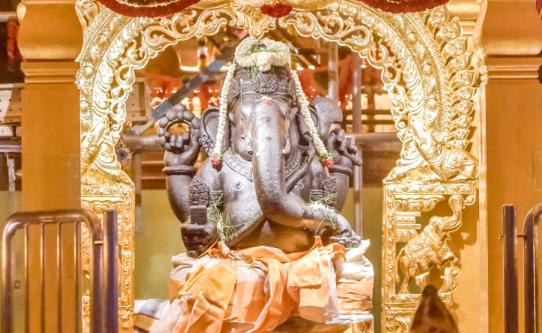
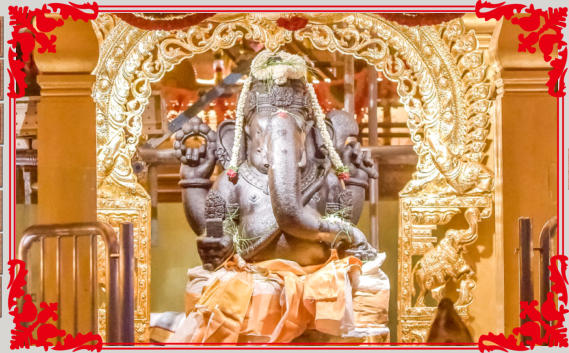
Ganesha


Ganesha是印度教最受欢迎、最具智慧与慈悲的神祇之一,相传他是帕尔瓦蒂用黄土捏成的儿子,赋予生命后
守护母亲,年轻时就以聪明机智和勇敢著称。有一次,当湿婆回家时,Ganesha忠实地遵照母亲吩咐守在门
口,不让任何人进入,湿婆一怒,用三叉戟将Ganesha斩首。帕尔瓦蒂悲痛欲绝,湿婆为了安抚她,命令将第
一个看到的生物的头装上Ganesha,结果是一只象头,于是Ganesha重生,并从此拥有象头与非凡智慧。
在他的成长故事中,还有许多著名典故:例如他在与弟弟卡尔蒂克耶比赛谁能最快绕遍宇宙三圈时,Ganesha
因象征智慧而没有绕行宇宙,而是绕着父母一圈,表示父母即是宇宙,他因此胜出,体现智慧与孝道兼备;又如
Ganesha的鼠坐骑象征谦卑、灵巧和克服微小却难缠的障碍;他的破肚故事中,人们说他曾因手持甜点而让肚
子裂开,却仍把食物分享给众神,象征宽容与慷慨。
象头神Ganesha象征智慧、勇气与善良,他的象鼻象征灵活应对困难,他的巨肚象征包容与财富,他是学业、
事业、家庭幸福和障碍克服的守护神。在印度及全世界的信徒中,人们在新年、开业、考试、旅行或任何新开始
前都会祭拜Ganesha,供奉香、鲜花、水果、甜点或乳制点心,祈求智慧、顺利、好运与成功。他的故事不仅教
育人们勇敢面对挑战,也教导以智慧、善意与包容化解人生中的各种困境。
Ganesha is one of the most beloved and revered deities in Hinduism, known for his
wisdom, compassion, and ability to remove obstacles. According to legend, he was
created by Parvati from clay and brought to life to serve as her devoted son and
protector. From a young age, he displayed extraordinary intelligence, courage, and
loyalty.
One famous story tells that when Shiva returned home one day, Ganesha, following
his mother’s orders, blocked the entrance and refused to let anyone in. Enraged,
Shiva severed Ganesha’s head. Parvati was heartbroken, so Shiva replaced it with
the head of the first creature he encountered—a strong and wise elephant—bringing
Ganesha back to life, and from then on he became the elephant-headed god.
Many other legends illustrate his cleverness and virtue. In one story, Ganesha
competed with his brother Kartikeya to see who could circle the universe fastest.
Instead of racing around the cosmos, Ganesha circled his parents, symbolizing that
honoring one’s parents is equivalent to respecting the universe, and thus he won,
showing wisdom and filial piety. His mouse mount symbolizes humility,
resourcefulness, and the ability to overcome even small but persistent obstacles.
Another tale describes him sharing sweets from his large belly despite breaking it,
symbolizing generosity and tolerance.
Ganesha’s elephant head represents wisdom and insight, his large belly signifies
abundance and acceptance, and his mouse mount represents humility and
cleverness. He is worshipped as the remover of obstacles and the protector of
learning, business, and family happiness. Devotees in India and around the world
offer incense, flowers, fruits, sweets, and dairy treats, especially before new
ventures, exams, or journeys, praying for wisdom, good fortune, and success. His
stories teach courage, cleverness, compassion, and the use of wisdom and
generosity to overcome life’s challenges. ��
蜡烛、鲜花(如万寿菊)、水果(如香蕉、椰子、芒果)、甜点(特别是甘露球)、乳制品及灯盏





